


Redness, Breakouts, or Rosacea? The 4 Types You Need to Know

If you struggle with a face that constantly flushes, stings, or breaks out out of nowhere, you are far from alone. Here in Northern Ireland, our fair Celtic skin tones and unpredictable weather make rosacea one of the most common skin concerns we treat at our Lisburn clinic.
But here is the catch: rosacea isn’t just "rosy cheeks." It is a complex, chronic inflammatory condition that takes different forms. Treating it successfully means knowing exactly which type you have.
At Brook Aesthetics, we categorize rosacea into four distinct types. Let’s break them down so you can identify yours—and learn how we treat it.
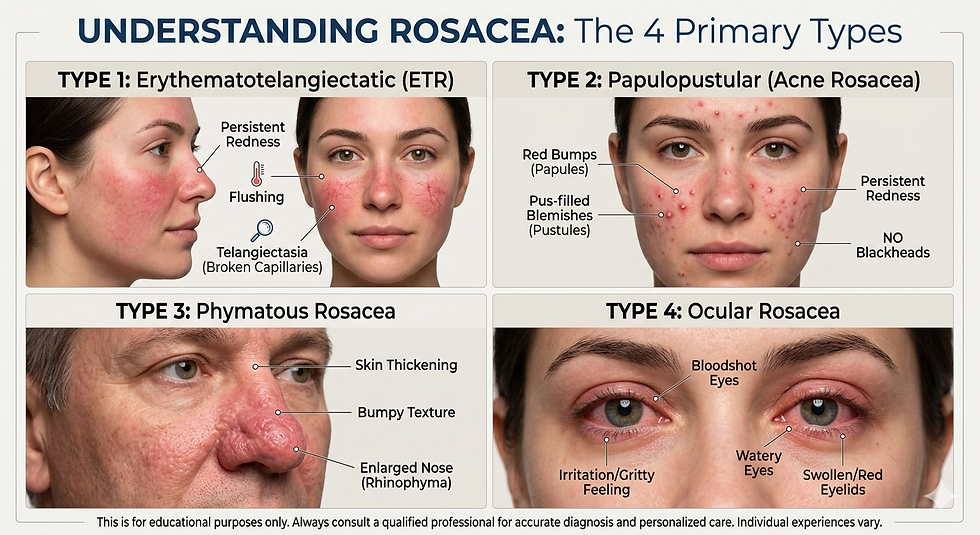
1. Type 1: Erythematotelangiectatic Rosacea (ETR)
What it looks like: Persistent redness, easy blushing, and visible "spider veins" across your nose and cheeks.
How it feels: Your skin feels incredibly sensitive, tight, and hot to the touch. Applying standard skincare might cause an immediate stinging or burning sensation.
The Triggers: A cold, windy walk through Lisburn, a glass of red wine, or a hot bath can trigger an instant flare-up.
2. Type 2: Papulopustular Rosacea (Acne Rosacea)
What it looks like: Small, red bumps and pus-filled blemishes sitting on top of underlying facial redness.
The Common Mistake: This type is constantly misdiagnosed as adult acne.
The Brook Aesthetics Tip: If you are treating these bumps with harsh, drying acne scrubs or salicylic acid, you will likely make your rosacea worse. The giveaway is that rosacea bumps do not feature blackheads, and the skin beneath them is dry and compromised, not oily.
3. Type 3: Phymatous Rosacea
What it looks like: The skin begins to thicken, expand, and develop a bumpy, uneven texture.
Where it strikes: It most commonly affects the nose (known clinically as rhinophyma), making it appear slightly bulbous or swollen. While rosacea generally affects more women, this specific type is far more common in men.
4. Type 4: Ocular Rosacea
What it looks like: Bloodshot, watery, or irritated eyes.
How it feels: Your eyes feel constantly dry, gritty (like you have sand trapped in them), or sensitive to light, often paired with swollen, flaky eyelids.
The Clinical Reality: It is incredibly common to experience an overlap. You might suffer from the flushing and broken capillaries of Type 1, alongside the stubborn blemishes of Type 2.
How We Treat Rosacea at Brook Aesthetics
Because rosacea is an inflammatory condition rooted in a compromised skin barrier, a generic facial or high-street acne cream won't cut it. As a specialized skin and prescribing clinic, we tackle rosacea from a medical and clinical perspective:
Advanced Skin Barrier Repair: We design bespoke medical-grade skincare regimes utilizing target ingredients, and botanical anti-inflammatories to cool the skin and stop the inflammatory cascade.
Targeted Clinical Treatments: From advanced medical facials to specialized skin-calming peels, we customize our in-clinic treatments to reduce vascular redness, clear up papules, and rebuild your skin’s resilience.
Ready to calm your skin?
Don't guess when it comes to inflammatory skin conditions. Let us take a professional look, analyze your triggers, and build a bespoke management plan to give you back clear, calm, comfortable skin.
Want to book a comprehensive skin consultation at Brook Aesthetics?

Comments